AC Repair Apopka FL | Air Conditioning Diagnostics
Experienced AC repair in Apopka, FL. We troubleshoot frozen coils, warm vents, failed capacitors, and refrigerant leaks. Call (407) 337-4494 for dispatch!
Precision Testing
Voltage, subcooling, superheat, and static pressure checks.
Prompt Arrival
Dedicated local dispatch fleet across Apopka and North Orange County.
Clear Pricing
Written clear project estimates provided prior to work authorization.
Experienced Team
EPA Section 608 certified technicians and background screening.
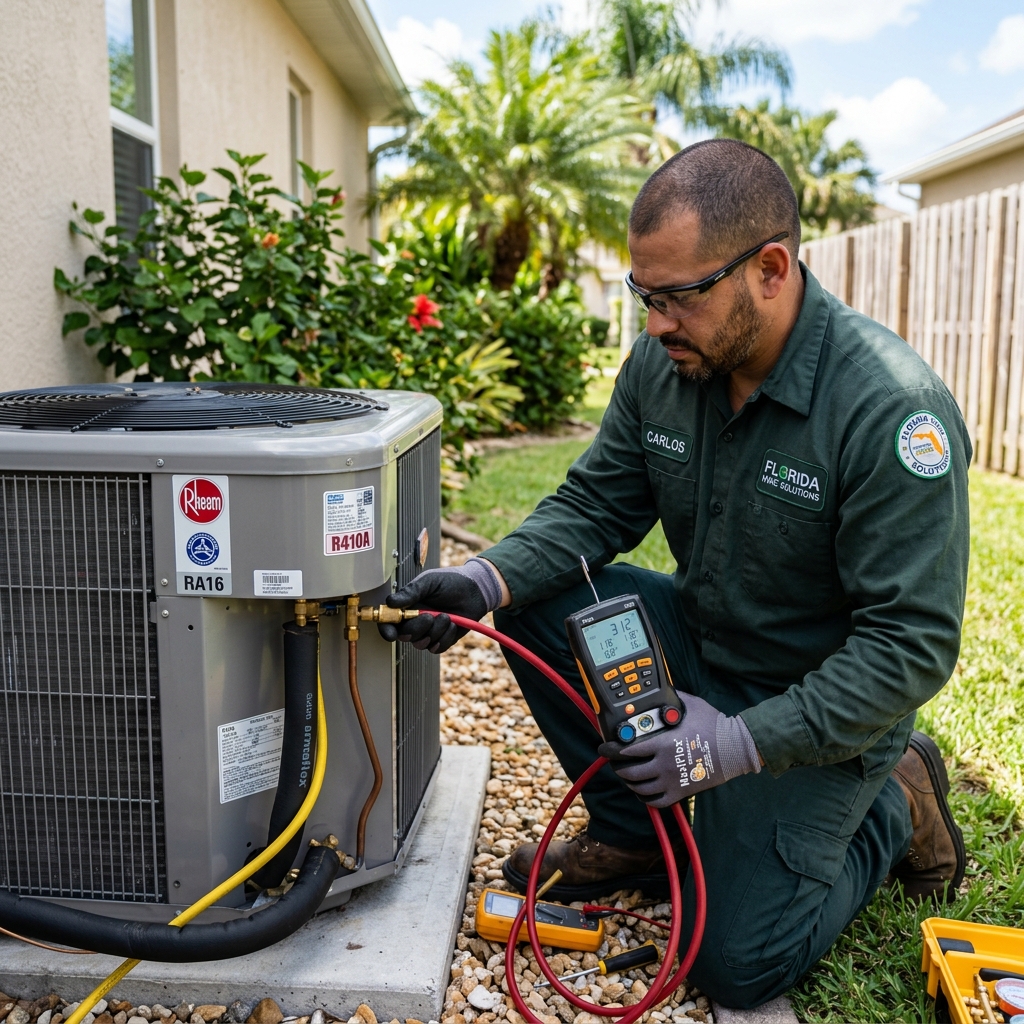
Professional Air Conditioning Repair in Apopka, Florida
When an air conditioning system malfunctions during Central Florida's summer months, indoor temperatures can rise rapidly into the upper 80s and 90s, while relative humidity levels soar past 70%. In Apopka, a properly functioning cooling system is essential for maintaining a safe, comfortable, and healthy indoor living environment.
At Apopka HVAC, our experienced technicians specialize in comprehensive diagnostic evaluation and precision repair for all makes and models of residential and light commercial cooling equipment. We address electrical failures, refrigerant leaks, mechanical compressor breakdowns, and ductwork airflow restrictions with prompt local dispatch and clear project estimates.
Common Signs Your Air Conditioner Needs Professional Repair
Air conditioning systems rarely fail without warning. In most cases, subtle operational changes occur before complete mechanical shutdown. Recognizing these warning signs early prevents minor component stress from cascading into major compressor burnout.
Warm Air Discharging from Vents: If your system fan blows continuously but the air entering rooms feels lukewarm or room-temperature, your compressor, refrigerant circuit, or run capacitor requires immediate evaluation. Frequent Short-Cycling: An air conditioner that turns on and off every few minutes without satisfying thermostat setpoints indicates electrical relay malfunction, severe coil restriction, or thermal overload tripping. Unusual Mechanical Noises: Screeching, grinding, or loud metallic banging sounds indicate worn motor bearings, damaged fan blades, or compressor internal failure. Ice Accumulation on Refrigerant Lines: Visible ice formation on copper suction lines or indoor evaporator coils signals restricted duct airflow or low refrigerant pressure. Indoor Water Accumulation: Water pooling around the air handler base indicates a clogged condensate drain line, failed float switch, or damaged drain pan. Excessive Indoor Humidity: If air feels heavy, sticky, or damp despite thermostat settings, your system's moisture removal process has degraded.
Comprehensive Diagnostic and Repair Capabilities
Our diagnostic protocol involves rigorous physical and electrical testing of every major cooling component. Rather than replacing parts indiscriminately, our technicians isolate the root mechanical or electrical cause.
1. Dual-Run Capacitor and Contactor Service
The capacitor provides initial electrical torque to start compressor and outdoor fan motors. In Florida's extreme summer heat, electrical capacitors degrade rapidly under thermal stress. Replacing weakened capacitors restores proper motor starting torque and prevents motor winding burnout.
2. Refrigerant Leak Detection and Circuit Service
Refrigerant leaks reduce system cooling capacity while forcing compressors to run continuously under elevated operating temperatures. Our technicians utilize electronic leak detectors and nitrogen pressure testing to locate pinhole leaks in evaporator coils, condenser tubing, and service valves.
3. Evaporator and Condenser Coil Maintenance
Dirt and organic buildup on coil fins restrict airflow and reduce heat exchange efficiency. We clean condenser coils with non-corrosive foaming cleaners and flush evaporator coil drain pans to restore full cooling transfer.
4. Blower Fan Motor and Air Handler Repair
Blower motors pull indoor air across cold evaporator coils and distribute cooled air through attic ductwork. We repair failed blower capacitors, replace worn motor bearings, and recalibrate variable-speed ECM blowers to maintain optimal static pressure.
Technical Causes Behind Cooling Failures
Understanding why air conditioners fail helps homeowners make informed repair decisions. Central Florida's climate creates specific stress vectors:
- Continuous Thermal Load: Operating 10 to 14 hours per day during summer heat waves accelerates mechanical wear on contactor points, motor bearings, and fan blades.
- High Ambient Moisture: High relative humidity causes rapid algae and organic growth inside dark condensate drain lines, leading to drain line clogs and emergency float switch shutoffs.
- Power Surges and Lightning Activity: Central Florida's frequent summer lightning storms generate electrical voltage spikes that damage sensitive control boards, smart thermostats, and compressor windings.
Repair vs. System Replacement Evaluation
Homeowners frequently ask whether repairing an existing system is cost-effective or if system replacement is the smarter investment. We provide transparent technical guidance based on the 50% Rule and unit operating efficiency.
System Age | Under 8 Years Old | Over 10–12 Years Old Refrigerant Type | R-410A Systems | Outdated R-22 Refrigerant Repair Cost Ratio | Under 30% of New Unit Cost | Exceeds 50% of New Unit Cost Energy Bills | Normal Monthly Rates | Escalating Utility Costs System Condition | Single Isolated Component Fault | Multiple Major Mechanical Failures
Local Apopka Service Focus
Apopka's housing stock ranges from historic downtown properties and established golf community homes in Errol Estate to newer residential developments along Rock Springs Road. Each home style presents unique duct layout, electrical panel, and cooling equipment requirements. Our experienced technicians understand local building structures and climate conditions, ensuring long-lasting repair results.
For prompt local dispatch, system troubleshooting, and clear project estimates, call Apopka HVAC today at (407) 337-4494.
Central Florida HVAC Operating Standards and Technical Dispatch Guidelines
Operating a residential heating and air conditioning system in Apopka and Orange County requires rigorous mechanical oversight due to extreme subtropical climate conditions. Extended annual run times exceeding 2,800 hours place continuous thermal strain on dual-run capacitors, blower motor bearings, reversing valves, and hermetic scroll compressors.
01. Electrical and Thermal Diagnostics
Technicians measure total external static pressure (TESP), verify compressor voltage draw against manufacturer specifications, and test capacitor microfarad ratings to prevent unexpected summer shutdowns.
02. Refrigerant and Airflow Optimization
Subcooling and superheat temperatures are calculated using digital gauges. Proper R-410A or R-32 refrigerant charge prevents evaporator coil freeze-ups and maximizes cooling capacity.
03. Condensate and Mold Prevention
High ambient relative humidity demands monthly condensate drain line vacuum flushing and EPA-registered pan treatment to protect home ceilings and indoor air quality from algae backups.
Apopka HVAC provides local technician dispatch throughout Apopka, Altamonte Springs, Maitland, Winter Garden, Ocoee, Mount Dora, Errol Estate, Sweetwater Oaks, and Wekiwa Springs. Contact our local dispatch line at (407) 337-4494 for system evaluations and clear project estimates.
Preventive HVAC Care and Energy Efficiency Standards in Apopka
Central Florida homeowners face continuous cooling challenges from March through December. High outdoor ambient heat causes AC compressors to operate under elevated head pressure, requiring routine capacitor microfarad testing and electrical contactor inspection to prevent unexpected compressor burnout.
Dual-Run Capacitor Maintenance
Capacitors assist motor startup. When capacitance drops by more than 10%, motors run hot and risk winding insulation failure during peak summer heat spikes.
Coil Rinsing and Heat Dissipation
Dirty outdoor aluminum condenser fins trap heat, forcing compressors to draw higher amperage and raising monthly electricity bills across Orange County homes.
For technical assistance or system diagnostics in Apopka, FL and surrounding Orange County communities, contact Apopka HVAC dispatch at (407) 337-4494 today.
Orange County HVAC Building Code and Environmental Guidelines
Residential heating and cooling operations across Apopka, Orange County, and Central Florida follow Florida Building Code Mechanical standards and EPA Section 608 guidelines. Our technicians perform nitrogen purging during line set brazing and execute deep vacuum evacuations below 500 microns to protect refrigeration circuits from atmospheric air and moisture.
For technical assistance, system diagnostics, or project estimates in Apopka FL, contact Apopka HVAC dispatch at (407) 337-4494 today.
Schedule Service Call
Need prompt technician evaluation or service scheduling in Apopka or surrounding communities?
CALL DISPATCH: (407) 337-4494Experienced Technicians • Clear Estimates
Related HVAC Services
Frequently Asked Questions
Direct, technical, and localized answers to common HVAC inquiries in Apopka.
How quickly can a technician inspect my broken AC in Apopka? ↓
We offer prompt local dispatch throughout Apopka and surrounding North Orange County communities. Our experienced technicians evaluate system electricals and refrigeration circuits to isolate faults.
What causes an AC unit to leak water indoors? ↓
Indoor water leaks stem from algae buildup in the condensate drain line, cracked drain pans, or frozen evaporator coils defrosting rapidly due to low airflow or low refrigerant.
Is it worth repairing an 11-year-old air conditioner? ↓
If the repair cost is minor (such as a capacitor or contactor replacement), repair makes sense. However, if the compressor has failed or the unit leaks R-22 refrigerant, replacement is recommended.
Schedule Service in Apopka, FL
Contact our team for prompt local dispatch and experienced technician evaluation.
CALL DISPATCH: (407) 337-4494